
Hiring security guard services is one of the most reliable ways to protect businesses, properties, and the people who use them. As security needs continue to evolve and technology becomes more advanced, it is important to measure whether your security guard services are truly effective.
This guide walks you through the essential factors, metrics, and tools you can use to assess your security team and maintain a safe, well-protected environment.
Table of Contents
- Set Clear Security Objectives and Performance Expectations
- Maintain Regular Communication and Provide Performance Feedback
- Evaluate the Quality of Incident Reports and Documentation
- Assess Patrol Performance and On-Ground Awareness
- Review Training, Certifications, and Skill Development
- Measure Client, Employee, or Tenant Satisfaction
- Use KPIs and Performance Metrics to Track Results
- Use Technology to Improve Transparency and Accountability
- Key Takeaways for Evaluating Effective Security Guard Services
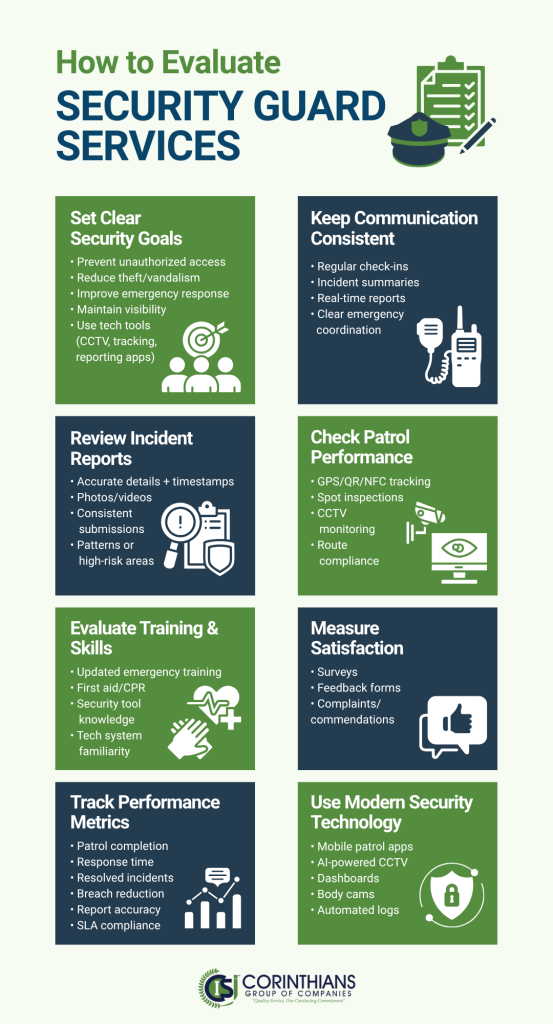
1. Set Clear Security Objectives and Performance Expectations
Before evaluating your security guard services, define what effective security means for your business. Clear objectives serve as your performance benchmark.
Some common objectives include:
- Preventing unauthorized access
- Reducing theft, vandalism, and internal incidents
- Improving emergency response times
- Enhancing customer, tenant, or employee safety
- Maintaining consistent visibility and situational awareness
Many businesses today also include technology-related expectations such as digital patrol tracking, AI-assisted monitoring, and mobile reporting systems.
2. Maintain Regular Communication and Provide Performance Feedback
Consistent communication with your security provider supports continuous improvement and alignment.
Recommended practices include:
- Weekly or monthly review meetings
- Incident summaries and action recommendations
- Real-time reporting through dashboards
- Digital communication logs for faster coordination
- Instant alert systems during emergencies
Clear and regular communication ensures your security team understands your needs and meets your expectations.
3. Evaluate the Quality of Incident Reports and Documentation
Incident reports remain one of the most reliable ways to assess security guard performance.
Check for the following:
- Detailed and accurate documentation with timestamps
- Attached photos or videos through reporting apps
- Identification of recurring patterns or high-risk areas
- Consistency in report submission
- AI-supported categorization or tagging (if available)
Regularly reviewing these reports helps you spot problems early and understand how effectively your guards respond to incidents.
4. Assess Patrol Performance and On-Ground Awareness
A strong security team is alert, proactive, and thorough in their patrol duties.
You can evaluate patrol efficiency through:
- GPS-based digital patrol tracking
- QR or NFC checkpoints
- Random spot inspections
- Surveillance monitoring performance
- Compliance with patrol routes and protocols
These tools and practices help verify that guards are completing patrols correctly and staying attentive on duty.
Related: 4 Key Importance of Mobile Patrol Security Guards in Your Business
5. Review Training, Certifications, and Skill Development
Security threats change over time, so continuous training is essential.
Evaluate your guards based on:
- Updated emergency and crisis response training
- First aid, CPR, and AED certifications
- Familiarity with AI-assisted surveillance tools
- Knowledge of local regulations and security standards
- Ability to use mobile reporting and monitoring systems
Well-trained guards react faster, remain confident under pressure, and deliver better overall performance.
Related: 3 Reasons Why First Aid Training for Security Guards is a Must
6. Measure Client, Employee, or Tenant Satisfaction
People who interact with your guards daily can offer valuable insights.
You can collect feedback through:
- Short surveys
- Interviews
- Digital feedback forms
- Complaint and commendation records
High satisfaction levels often reflect professionalism, visibility, and consistent responsiveness.
7. Use KPIs and Performance Metrics to Track Results
Data-based evaluation helps you measure performance objectively.
Useful KPIs for security guards include:
- Patrol completion rate
- Incident response time
- Number of resolved incidents
- Reduction in security breaches
- Accuracy and consistency of reports
- Compliance with service level agreements
- Customer or tenant satisfaction scores
Tracking these metrics regularly allows you to measure improvement over time.
8. Use Technology to Improve Transparency and Accountability
Modern security companies use digital tools to enhance guard performance and make evaluation easier.
Highly effective security providers often use:
- Mobile patrol and reporting apps
- AI-enhanced CCTV systems
- Real-time dashboards and analytics
- Wearable cameras or body cams
- Automated scheduling and performance logs
These tools reduce human error and provide clear, trackable data on guard performance.
Related: How Innovations are Transforming Security Guard Services
Key Takeaways for Evaluating Effective Security Guard Services
Evaluating the effectiveness of security guard services requires a mix of clear expectations, consistent monitoring, and data-based performance measurement. By reviewing incident reports, tracking KPIs, assessing training, and using modern technology, you can ensure that your security team delivers the level of protection your business needs.
Hire specialized security guard services in the Philippines today and keep your business secure. Contact us now!
Last Updated: December 19, 2025
First Published: June 15, 2023

Camille J. covers a wide range of security topics, including professional security services, personnel training, and modern security solutions. She aims to present information in a clear and practical way, helping readers better understand the role security plays in today’s workplaces and communities.