
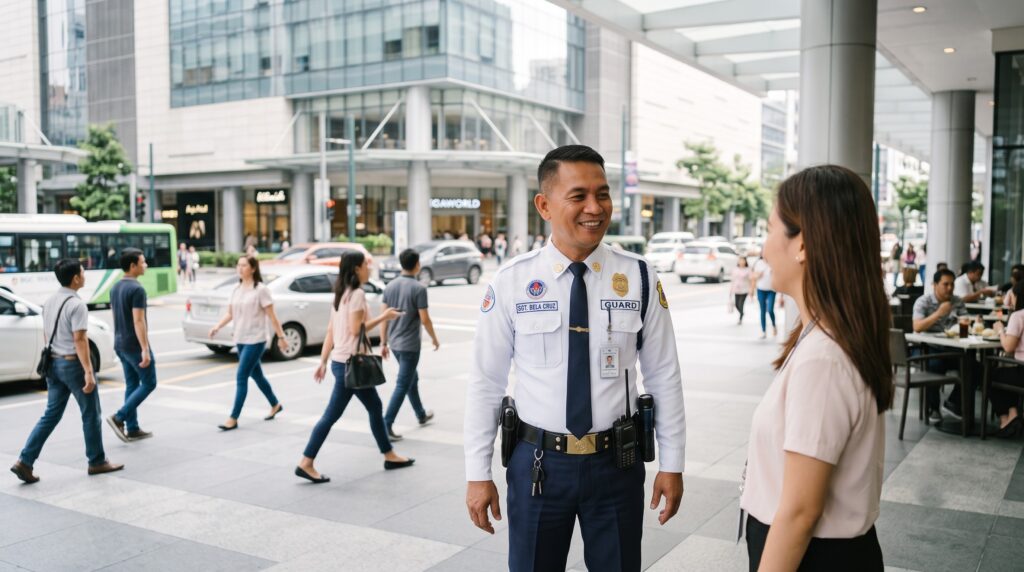
Security plays a major role in every business in the Philippines. From offices and malls to schools, hospitals, and residential buildings, the presence of a security guard helps maintain order, safety, and customer confidence.
For many job seekers, becoming a security guard is one of the most accessible career paths. However, like any profession, it comes with both advantages and challenges.
If you’re considering this career or simply want to understand it better, here’s a clear breakdown of the pros and cons of being a security guard in the Philippines.
Key Takeaways on Being a Security Guard in the Philippines
- A security guard in the Philippines plays a key role in protecting people, property, and maintaining order.
- It is an accessible and in-demand career with basic training and licensing requirements.
- The job offers stable employment, skill development, and potential career growth in the security field.
- Common challenges include long hours, shift work, fatigue, and risk exposure.
- Overall, it is a practical and respected career with both opportunities and responsibilities.
Table of Contents
- What Does a Security Guard Do in the Philippines?
- Pros of Being a Security Guard in the Philippines
- Cons of Being a Security Guard in the Philippines
- Why Businesses in the Philippines Need Security Guards
- Final Thoughts on Being a Security Guard in the Philippines
- FAQs on Security Guards in the Philippines
What Does a Security Guard Do in the Philippines?
A security guard is responsible for protecting people, property, and assets. Their duties typically include:
- Monitoring entrances and exits
- Conducting routine patrols
- Responding to emergencies
- Reporting suspicious activity
- Enforcing company or building rules
Security guards are commonly deployed in commercial buildings, schools, hospitals, banks, condominiums, and industrial sites across the country.
Pros of Being a Security Guard in the Philippines
1. Easy Entry Into the Workforce
One of the biggest advantages of becoming a security guard in the Philippines is accessibility.
Unlike many professions that require a college degree, security work mainly requires:
- Security Guard License (issued by PNP-SOSIA)
- Basic training certification
- Physical and medical fitness
This makes it one of the more practical job options for many Filipinos entering the workforce.
2. High Demand for Security Guards
Security guards are consistently in demand across the Philippines due to growing urban development and business expansion.
You can easily find employment in:
- Offices and corporate buildings
- Shopping malls
- Schools and universities
- Hospitals
- Residential condominiums
- Construction and industrial sites
This demand improves job stability for trained guards.
3. Exposure to Different Work Environments
Working as a security guard allows you to experience various industries and settings.
You may be assigned to different locations over time, which helps you:
- Gain diverse work experience
- Interact with different types of people
- Develop communication and observation skills
This variety makes the job more dynamic than many expect.
4. Opportunity to Develop Discipline and Responsibility
Security work builds strong personal discipline. Guards are trained to be:
- Alert and observant
- Responsible under pressure
- Punctual and dependable
These skills are valuable and transferable to other careers.
5. Stable and Long-Term Employment Opportunities
Security work often provides long-term job stability, especially for guards assigned to reputable agencies and consistent posts like malls, offices, and residential buildings. Many guards are retained for years due to reliability and trust.
6. Entry Point for Career Growth in Security Services
Starting as a security guard can open doors to higher positions such as:
- Security supervisor
- Security officer
- Security manager
- Loss prevention specialist
With experience and further training, it can become a long-term career path.
7. Opportunities for Overtime and Additional Income
Many security guards in the Philippines have access to overtime pay, holiday pay, and special duty assignments, which can increase overall monthly earnings.
8. Skill Development for Future Careers
Beyond discipline, security work also helps develop:
- Conflict handling
- Customer service skills
- Emergency response awareness
- Situational judgment
These are transferable skills useful in many other industries, including law enforcement and corporate roles.
Cons of Being a Security Guard in the Philippines
1. Exposure to Risk and Safety Threats
One of the biggest challenges of being a security guard is the potential risk involved.
Security personnel may encounter:
- Theft or trespassing incidents
- Aggressive or intoxicated individuals
- Emergency situations such as fire or medical incidents
Proper training and adherence to protocols are essential to minimize risks.
2. Long Working Hours and Shift Schedules
Security guards in the Philippines often work:
- 8 to 12-hour shifts
- Night duty or rotating schedules
- Holidays and weekends
This can affect sleep patterns, family time, and overall work-life balance—especially for new guards adjusting to graveyard shifts.
3. High Alertness and Mental Fatigue
Security work requires constant vigilance.
Guards must stay alert at all times, which can lead to:
- Mental exhaustion
- Stress from long periods of monitoring
- Pressure to respond quickly in emergencies
The job demands both physical presence and mental endurance.
4. Dealing With Difficult Situations and People
Security guards often serve as the first point of contact in conflict situations.
They may need to handle:
- Angry customers or visitors
- Rule violations
- Disputes or misunderstandings
Strong communication and emotional control are essential in these situations.
Why Businesses in the Philippines Need Security Guards
- Crime prevention – Deters theft, trespassing, and other security risks.
- Protection – Safeguards employees, customers, and business assets.
- Access control – Monitors and regulates entry and exit points.
- Emergency response – Acts quickly during fires, accidents, or threats.
- Customer confidence – Builds trust by creating a safe environment.
- Smooth operations – Helps maintain order and daily workflow.
- Loss reduction – Minimizes risks that can cause financial damage.
Related: Benefits of Having a Security Guard for your Business
Final Thoughts on Being a Security Guard in the Philippines
The role of a security guard in the Philippines is not just about standing watch—it is about protecting people, property, and maintaining peace of mind in different environments such as offices, schools, hospitals, and commercial establishments.
While the job comes with challenges like long working hours, shift schedules, and exposure to risk, it also provides meaningful benefits such as job stability, easy entry into the workforce, and valuable real-world experience.
Overall, being a security guard in the Philippines is a respectable and essential profession that plays a crucial role in keeping communities and businesses safe. For those considering this career—or those in need of trained security personnel—partnering with a trusted security agency ensures proper training, professionalism, and reliable protection on the ground.
FAQs on Security Guards in the Philippines
What are the qualifications to become a security guard in the Philippines?
To become a security guard in the Philippines, you must complete basic security training, pass a medical and neuro-psychiatric exam, and obtain a Security Guard License from PNP-SOSIA. Most applicants also need at least a high school diploma and must be physically and mentally fit for duty.
Related: How to Be a Security Guard in the Philippines: A Step-by-Step Guide
Is being a security guard a good job in the Philippines?
Yes. Being a security guard in the Philippines is considered a stable and in-demand job. It offers consistent employment opportunities in malls, offices, schools, hospitals, and residential areas, especially in urban locations.
How much does a security guard earn in the Philippines?
Salaries vary depending on location, agency, and assignment. On average, a security guard in the Philippines may earn around minimum wage to slightly above, with additional pay for overtime, night shifts, and special assignments.
Do security guards in the Philippines work long hours?
Yes. Most security guards work 8 to 12-hour shifts, including night shifts, weekends, and holidays. Rotating schedules are common depending on the assignment and security agency.
Related: 6 Tips for Graveyard Shift Security Guards
What are the biggest challenges of being a security guard?
The main challenges include long working hours, dealing with difficult individuals, staying alert for long periods, and handling potentially risky situations while maintaining professionalism at all times.
Do you need training to become a security guard in the Philippines?
Yes. Proper training is required before deployment. Training covers security procedures, emergency response, communication skills, and basic safety protocols. Most training is provided by accredited security agencies or training centers.
Where do security guards usually work in the Philippines?
Security guards are commonly assigned to corporate offices, malls, banks, schools, hospitals, condominiums, factories, and construction sites across the country.
Looking for a trusted provider of specialized security services in the Philippines? Get reliable, well-trained security professionals who ensure safety, protection, and peace of mind for your business or property.
Last Updated: June 2026
First Published: February 20, 2019

Camille J. covers a wide range of security topics, including professional security services, personnel training, and modern security solutions. She aims to present information in a clear and practical way, helping readers better understand the role security plays in today’s workplaces and communities.