
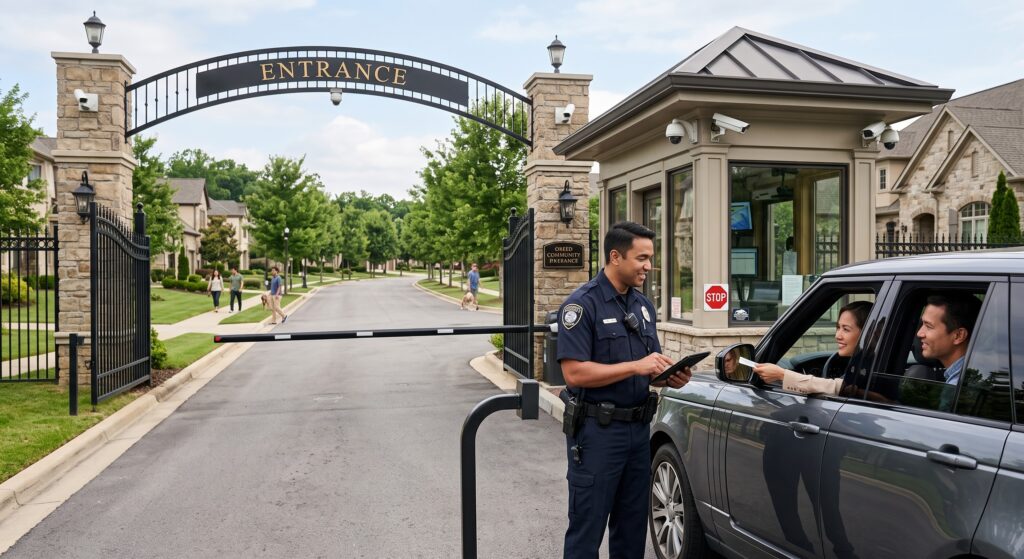
Safety in gated communities depends on more than walls, gates, and security guards. While controlled access helps reduce risks, residential communities are still vulnerable to unauthorized entry, theft, vandalism, and other security threats if proper measures are not consistently implemented. A proactive security strategy that combines trained personnel, modern technology, and active community participation creates a safer environment for homeowners, residents, visitors, and property managers.
Whether managing a homeowners’ association (HOA), subdivision, condominium, or private residential village in the Philippines, these practical tips can help strengthen security and improve peace of mind for everyone.
Key Takeaways on Safety in Gated Communities
- Safety in gated communities requires a layered security approach that combines trained security personnel, secure access control, surveillance systems, and active participation from residents.
- Partnering with a professional security agency helps ensure effective security operations, faster emergency response, and consistent enforcement of community security protocols.
- Modern security measures such as CCTV surveillance, visitor management systems, and routine security patrols help deter crime and protect residents, visitors, and property.
- Regular security audits and a well-developed emergency response plan help communities stay prepared for evolving security risks and unexpected incidents.
Table of Contents
- Partner with a Professional Security Agency
- Maintain Round-the-Clock Security Personnel Coverage
- Secure All Entry and Exit Points
- Implement Modern Access Control Systems
- Keep Communications Open Within the Community
- Install and Maintain Surveillance Cameras
- Improve Outdoor Lighting
- Maintain Accurate Visitor Management
- Strengthen Communication Within the Community
- Conduct Regular Security Audits
- Develop a Comprehensive Emergency Response Plan
- Encourage Resident Security Awareness
- Frequently Asked About Safety in Gated Communities
1. Partner with a Professional Security Agency
A reliable security agency serves as the foundation of a secure gated community. Hiring licensed and experienced security professionals ensures that trained personnel are assigned to monitor entrances, conduct patrols, respond to emergencies, and enforce community security policies.
Professional security guards are equipped to identify suspicious behavior, manage visitor access, handle security incidents, and respond quickly during emergencies. Reputable security agencies also provide continuous training, helping their personnel stay updated on current security threats and best practices. This level of expertise helps create a safer environment for residents while giving property managers greater confidence in their community’s security operations.
2. Maintain Round-the-Clock Security Personnel Coverage
It is important for every security personnel to be present at every access point they are assigned to, day and night. This gives a sense of security for residents and visitors that a security guard is accessible and nearby in case of an emergency.
Security guards should never leave their assigned post until their shift has officially ended and the next guard has arrived to take over. Leaving an access point unattended, even for a short period, can create opportunities for burglars and other intruders to enter the community unnoticed. Such security gaps may lead to theft, physical assaults, robbery, and other criminal activities that could otherwise be prevented through consistent security coverage and proper security protocols.
3. Secure All Entry and Exit Points
Entry and exit points are among the most vulnerable areas of any residential community, making proper access control essential. Whether a gated community has a single entrance or multiple access points, each one should be closely monitored and regularly inspected.
Perimeter walls, fences, gates, boom barriers, and pedestrian access points should remain in good condition to prevent unauthorized entry. Security personnel should consistently verify visitors, deliveries, contractors, and service providers before granting access. Clear access procedures reduce security risks while ensuring residents and authorized guests can enter the community safely and efficiently.
4. Implement Modern Access Control Systems
Technology has become an important part of residential security, allowing communities to strengthen access control while improving efficiency at entry points. Instead of relying solely on handwritten visitor logs, many gated communities now integrate digital systems that provide better monitoring and recordkeeping.
Common access control solutions include:
- RFID access cards for residents
- QR code visitor passes
- Biometric scanners
- Mobile access credentials
- License plate recognition for registered vehicles
These technologies help reduce unauthorized access, speed up visitor verification, and create accurate records that can support security investigations when necessary.
5. Keep Communications Open Within the Community
Regular patrols allow security personnel to detect potential security concerns before they escalate into larger incidents. Patrols should cover residential streets, parks, parking areas, clubhouses, playgrounds, and other shared spaces using both scheduled and randomized routes.
Changing patrol schedules makes it more difficult for criminals to predict guard movements while increasing the visibility of security personnel throughout the community. During each patrol, guards can inspect lighting, fences, gates, and other facilities, report maintenance issues, and respond immediately to suspicious activities or emergencies. Routine patrols not only discourage criminal behavior but also help residents feel more secure in their neighborhood.
6. Install and Maintain Surveillance Cameras
Surveillance cameras serve as an important layer of protection by providing continuous monitoring and valuable evidence whenever incidents occur. Modern CCTV systems allow security personnel to observe community activity in real time while maintaining recorded footage that can assist authorities during investigations.
For maximum coverage, surveillance cameras should be installed in strategic locations such as:
- Main entrances and exits
- Guardhouses
- Parking areas
- Clubhouses and amenities
- Perimeter fences
- Other high-traffic or high-risk areas
Routine inspections and maintenance are equally important to ensure cameras remain operational, produce clear footage, and continue supporting the community’s overall security strategy.
7. Improve Outdoor Lighting
Proper lighting is one of the simplest yet most effective ways to improve safety in gated communities. Criminals often take advantage of poorly lit areas where they are less likely to be seen, making adequate illumination an important crime deterrent.
Streetlights, pathways, sidewalks, parks, parking areas, and other common spaces should remain well lit to improve visibility during the evening. Good lighting also helps surveillance cameras capture clearer footage and enables security personnel to identify suspicious activity more easily. Regular inspections should be conducted to replace damaged or malfunctioning lights before they become security concerns.
8. Maintain Accurate Visitor Management
Visitor management plays an important role in protecting residents and monitoring community access. Every visitor should be properly identified, authorized by the resident they are visiting, and recorded before entering the premises.
Digital visitor management systems can make this process more efficient while reducing manual errors. Keeping accurate visitor records allows security personnel to monitor who enters and leaves the community, improves accountability, and provides valuable information if investigations become necessary. Consistent visitor management procedures also help create a more organized and secure environment for residents and their guests.
9. Strengthen Communication Within the Community
Maintaining safety in gated communities is a shared responsibility. While security personnel provide protection, residents and property managers also play an important role in identifying and reporting potential threats.
Communities should establish reliable communication channels that allow residents to quickly report suspicious activities, emergencies, or safety concerns. This may include community messaging groups, emergency hotlines, mobile applications, or neighborhood watch initiatives. Open communication enables faster responses from security personnel and encourages residents to actively participate in keeping their community safe.
10. Conduct Regular Security Audits
Security measures should be reviewed regularly to ensure they continue to meet the community’s needs. As security risks evolve, periodic assessments help identify vulnerabilities before they can be exploited.
Security audits typically involve inspecting access points, perimeter fences, CCTV systems, lighting, alarm systems, visitor procedures, and security personnel deployment. Reviewing existing policies and identifying areas for improvement allows homeowners’ associations and property managers to strengthen their overall security strategy while adapting to new challenges over time.
11. Develop a Comprehensive Emergency Response Plan
Even communities with strong preventive measures should be prepared for unexpected emergencies. Having a well-defined emergency response plan ensures security personnel, residents, and community staff know exactly how to respond during critical situations.
An emergency plan should include procedures for incidents such as:
- Fire emergencies
- Medical emergencies
- Break-ins or security threats
- Earthquakes and typhoons
- Power outages
- Community evacuations
Regular emergency drills and clear communication help residents become familiar with evacuation routes, emergency contacts, and reporting procedures. Being prepared can significantly reduce confusion and improve response times during actual emergencies.
12. Encourage Resident Security Awareness
A secure community depends not only on security personnel but also on residents who remain vigilant and actively support community safety initiatives. Simple actions such as locking doors and vehicles, reporting suspicious individuals, following visitor registration procedures, and staying informed about community advisories all contribute to a safer neighborhood.
Homeowners’ associations can further strengthen community security by organizing safety seminars, distributing security reminders, and encouraging residents to participate in neighborhood watch programs. When everyone understands their role in protecting the community, security becomes more proactive rather than reactive.
Conclusion: Safety in Gated Communities
Maintaining safety in gated communities requires more than security guards stationed at the entrance. A secure residential community is built on a combination of professional security services, effective access control, surveillance systems, routine patrols, proper lighting, emergency preparedness, and active participation from residents.
When these security measures work together, homeowners’ associations, property managers, and residential communities in the Philippines can better protect residents, visitors, and shared spaces while creating a safer and more welcoming environment.
Frequently Asked About Safety in Gated Communities
How can safety in gated communities be improved?
Gated communities can improve safety by hiring professional security personnel, implementing access control systems, maintaining CCTV surveillance, conducting regular patrols, improving outdoor lighting, enforcing visitor management procedures, and encouraging residents to report suspicious activities.
What security measures should every gated community have?
Every gated community should have trained security guards, controlled access points, surveillance cameras, visitor management procedures, routine patrols, adequate lighting, emergency response plans, and regular security audits.
Why is visitor management important in gated communities?
Visitor management helps monitor who enters and leaves the community, prevents unauthorized access, improves accountability, and provides valuable records that can assist during investigations if security incidents occur.
How do CCTV cameras improve residential security?
CCTV cameras help deter criminal activity, provide continuous monitoring, allow security personnel to observe suspicious behavior, and preserve footage that can support investigations and law enforcement.
Why is community participation important for residential security?
Security is most effective when residents work together with security personnel and property managers. Reporting suspicious activities, following community policies, and participating in neighborhood safety programs all contribute to a safer and more secure community.
Create a safer community with our professional security solutions for gated communities and subdivisions in the Philippines. Contact us today to learn more.
Last Updated: August 2026
First Published: June 30, 2021

Ellis C. is passionate about helping people make smarter decisions when it comes to safety and security. He enjoys turning everyday security concerns into practical, easy-to-understand advice that readers can apply with confidence. Ellis values preparation, awareness, and staying ready for the unexpected.